Ligue des droits humains

About us

Human rights are our common legacy. Founded in 1901, the LDH acts to defend and promote fundamental rights in Belgium. It is strictly independent of any political power.

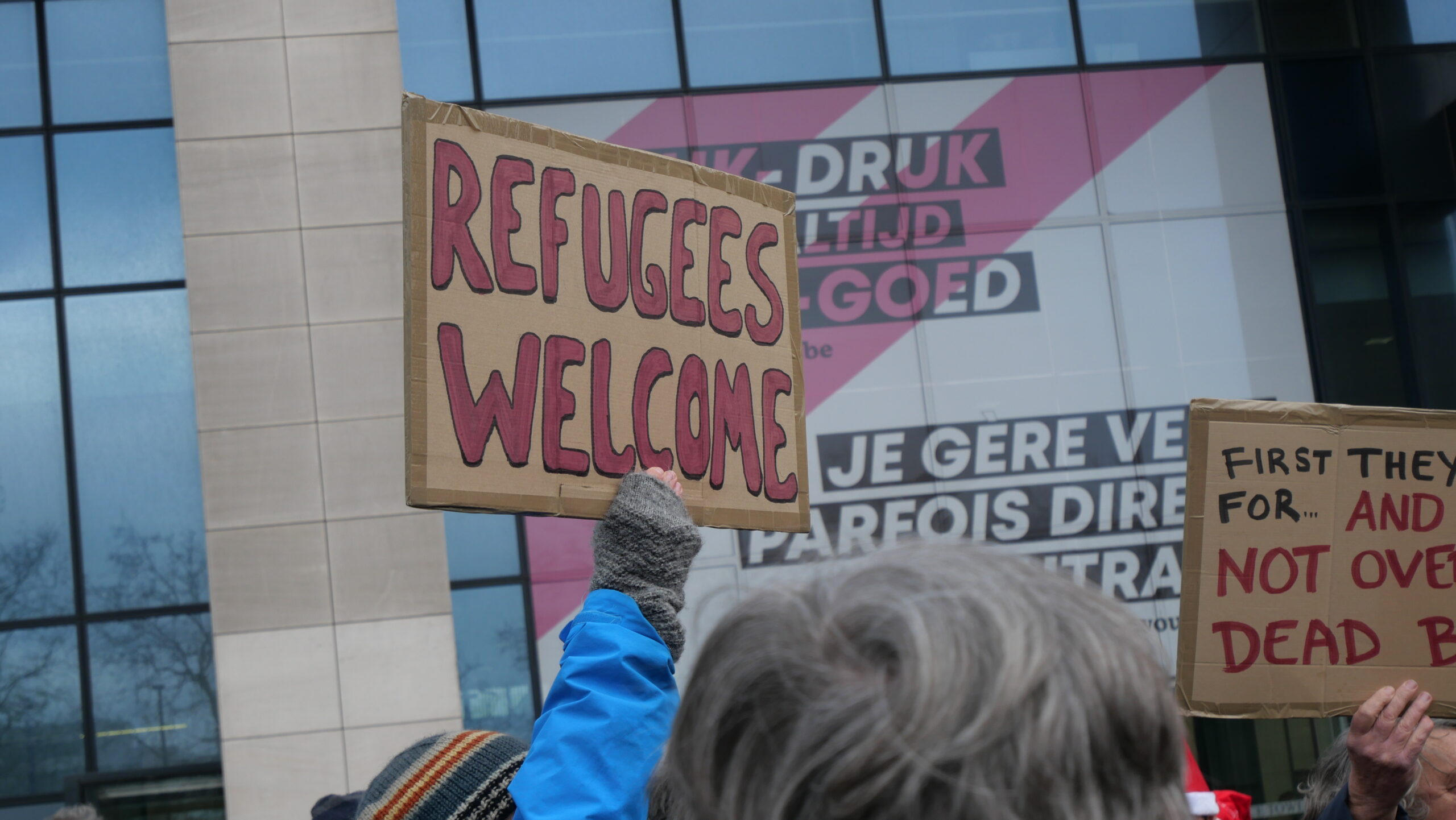
Photo manifestation LDH

Who we are

The LDH was set up in 1901 as a non-profit, independent, and non-partisan organisation focusing on combating injustices and safeguarding fundamental rights in Belgium.

Through a wide range of activities including strategic litigation, advocacy, campaigning, capacity building, and awareness-raising initiatives, the LDH works to defend and promote human rights. It is composed of several thematic working groups where academics, lawyers, social workers, activists, and citizens interested in the relevant areas bring their expertise and experience to reflect and develop projects on specific issues.

With a staff of 15, a committed Board and a broad network of trustful volunteers and partners, the LDH is recognized as the main human rights organization in Belgium with extensive experience in strategic litigation.

avocats au palais de justice

Upon its own initiative or together with partners, the LDH initiates legal proceedings against norms that violate human rights in Belgium. Sometimes, in very specific situations, we take individual cases to court to advance the rights of everyone.

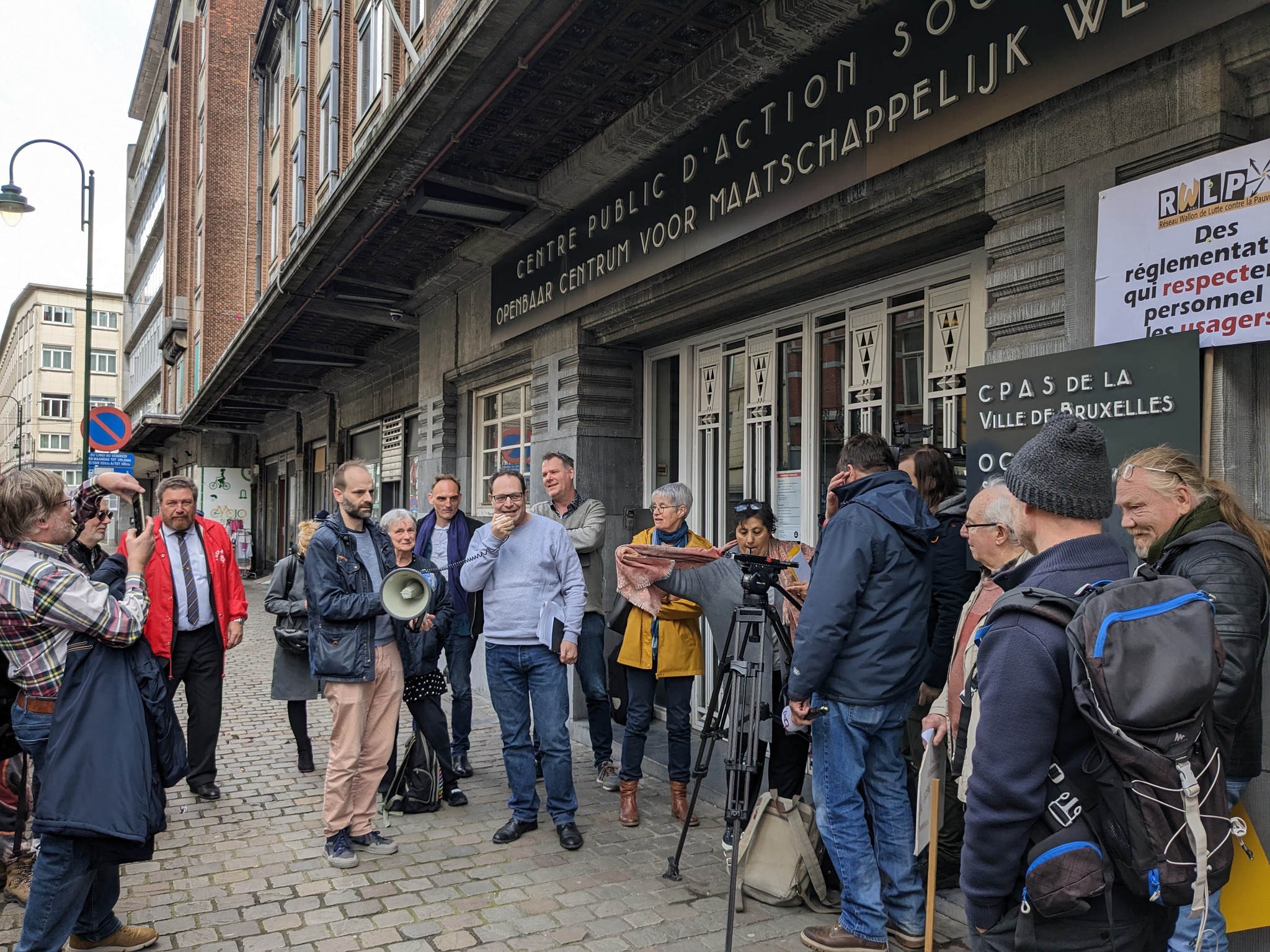
rassemblement de citoyens devant un CPAS

The LDH holds dialogue with public authorities, including governments and parliaments, to raise awareness on potential human rights violations and provide recommendations. We analyze draft legislation, produce legal analyses, participate in parliamentary hearings, and publish open letters and press releases.

affiche

Human rights are a tool for emancipation, critical thinking, and collective action. The LDH organizes awareness-raising activities, training courses, and other public events, both for a general audience or for specific groups. Our activities are open to everyone: professionals seeking to deepen their understanding on specific human rights issues, students, civil society workers and volunteers, anyone interested in human rights.

procès fictif

The LDH contributes to the public debate in various ways: we engage with the media, we take part in conferences and public mobilizations, we publish reports and analyses. We respond to invitations while also proactively addressing less visible but equally important issues.

Our
thematic areas

  • Economic, social, and cultural rights

    The LDH works on social, economic, and cultural rights (unemployment, pensions, social security, disabilities, etc.) and fights against discrimination. Together with other civil society organizations, we challenge public and private authorities through collective action. Our goal is to uphold equality, dignity, and real access to social justice for all, particularly most vulnerable groups.

  • Rights of migrants

    The LDH advocates for the rights of migrants and strongly opposes anti-migrant policies such as detention, deportations, border violence, and systemic discrimination. We demand effective protection and respect for the dignity of every person, regardless of their administrative status.

  • Children and young people

    The LDH defends the rights of young people, particularly on issues related to professional secrecy, LGBTQIA+ youth, and children’s participation. We pay special attention to the respect of human rights in the youth justice system.

  • Environmental issues

    Climate change poses a major challenge to human rights and environmental rights are a condition for the effective implementation of fundamental rights such as the right to life, the right to health, etc., primarily affecting most vulnerable groups. At the same time, the right to a clean, healthy and sustainable environment is itself a human right. The LDH fights for environmental justice.

  • Justice and the rule of law

    Justice is a moral principle of life in society, while independent judiciary is one of the three important pillars to uphold democracy and the rule of law. The LDH works on many issues such as access to justice, the rights of defense, the excessive use of criminal law, etc.

  • New technologies and privacy

    The right to privacy is threatened by a growing array of data collection tools and mass surveillance, reinforced by the development of artificial intelligence. The LDH adresses the social, political, and legal challenges posed by these emerging technologies, which represent a major challenge for human rights.

  • Prisons and human rights

    Deprivation of liberty is one of the most restrictive measures in a democracy. Whether as punishment, for security reasons, as an educational, health, or administrative measure, it poses significant risks for human rights. The LDH has been active on this topic for many decades.

  • Police and human rights

    The primary role of the police is to protect the population. At the same time, in the past decades, the LDH has documented too many cases of police violence, discrimination, racism, and the use of dangerous weapons or practices. We ask public authorities to recognize and take measures against of police violence.

Proud member of

The LDH is a member of several networks of human rights organizations.

  • Logo deFIDH

    FIDH

    The FIDH (International Federation for Human Rights) is an international human rights NGO federating nearly 200 human rights organisations worldwide. Since 1922, FIDH has been committed to defending all civil, political, economic, social, and cultural rights as enshrined in the Universal Declaration of Human Rights. As a non partisan, non sectarian, apolitical and not for profit organisation, FIDH acts in conjunction with its member and partner organisations through three strategic pillars: securing the freedom and capacity to act for human rights defenders, the universality of rights and their effectiveness.

  • Logo deLiberties

    Liberties

    The Civil Liberties Union for Europe (Liberties) is a watchdog that safeguards the human rights of everyone in the European Union. Based in Berlin, its network of organisations is spread across 20 EU countries. Liberties collaborate with its members to influence the EU and national governments to uphold everyone’s rights, using advocacy, litigation, public mobilisation and capacity-building on communications.

Contact us

Ligue des droits humains

53 Boulevard Léopold II
1080 Brussels
Belgium
+32 2 209 62 80

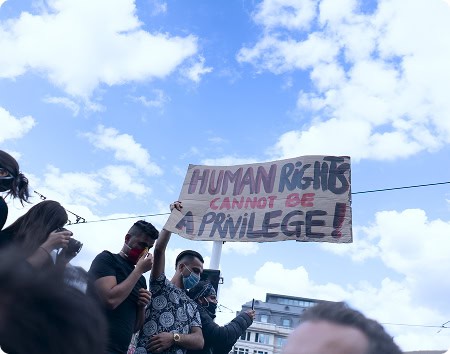
Photo manifestation LDH